
Things to Do in Namibia in October
October weather, activities, events & insider tips
Shoulder Season · Good Value
October Weather in Namibia
Temperature, rainfall and humidity at a glance
84°F (29°C)
High Temp
58°F (14°C)
Low Temp
0.5 inches (13 mm)
Rainfall
70%
Humidity
⚠ High UV exposure - burns possible in under 15 minutes at midday, at altitude on the escarpment
⚠ Sudden afternoon thunderstorms can flood dry riverbed crossings in Damaraland and erode gravel shoulders on C roads
Is October Right for You?
Weigh the advantages and considerations before booking
Advantages
- + Wildlife viewing reaches a seasonal peak in Etosha National Park as October's relentless heat forces lion, elephant, black rhino, and hundreds of zebra to crowd the dwindling waterholes, the same pools that are scattered and unpredictable in the green season. The behavior you'll witness is raw and unhurried: elephant spending two hours at a floodlit spring, young bulls sparring in the pale dust while vultures wait in acacia branches above. October may be your single best opportunity anywhere in Africa for sustained, unobstructed wildlife encounters at close range.
- + Accommodation rates tend to drop compared to the July-August peak, when South African and European visitors book Etosha's rest camps months in advance. October sits in the narrow window where the dry-season wildlife spectacle is still at full intensity but the school-holiday crowd has dispersed. Lodges that were completely booked in August still have rooms, and the ones that remain are operating with more personal attention than during the crush. It's shoulder season pricing with peak-season wildlife, which is likely your best overall value in the Namibian calendar.
- + The Namib Desert's dune landscape, Sossusvlei, Big Daddy at 325 m (1,066 ft), the ghostly white salt pan of Deadvlei with its 900-year-old dead camel thorn trees, photographs at its absolute best when October's long southern-hemisphere spring days produce that sculptural, shadow-carving light. By 5:30 AM the sky turns purple, then gold, and the contrast lines on the dunes' flanks are so precise they look drawn. You have until roughly 8:00 AM before the heat turns the light flat and the sand too bright to look at without squinting.
- + The coastal corridor, Swakopmund, Walvis Bay, the Cape Cross seal colony, is comfortable when the interior roasts. The cold Benguela Current holds Atlantic-facing temperatures in the 18-22°C (64-72°F) range even when Etosha is touching 40°C (104°F), and the sea fog that rolls in overnight tends to burn off by mid-morning. October is shoulder season for the coast, so the quad-biking and sandboarding operators have openings that require three-week advance booking in July.
Considerations
- − The interior heat is not symbolic, it is oppressive. Etosha's midday temperatures in October regularly touch 38-40°C (100-104°F) in direct sun, and the featureless white pan amplifies radiant heat from below as well as above. Game drives between 10 AM and 4 PM are largely wasted because the animals shelter under the few acacias with enough canopy to matter and barely move. You are effectively limited to a dawn drive and a late-afternoon drive each day, which works well if your lodge is comfortable and air-conditioned. But becomes miserable in a tent that is a solar oven by 8 AM.
- − October brings the first tentative pre-rains to northern Namibia, not the dramatic storms of December. But isolated afternoon build-ups that occasionally drop enough to turn the Caprivi Strip's (now called the Zambezi Region's) dirt tracks from dusty to impassably muddy within an hour. Most roads in Etosha and the south remain solid. But anyone planning Kaokoland or remote Zambezi routes in October should have a 4x4 with high clearance and understand that the same track that was firm in the morning may not be passable by 3 PM.
- − Dust is the constant companion of the dry season, and October's winds, which build as the heat intensifies, make it worse. Fine Kalahari dust works its way into camera bodies, laptop keyboards, food, and sinuses. Photographers who haven't shot in true desert conditions before consistently underestimate how aggressively they need to protect their gear. This is not an inconvenience you can improvise around on the day.
Best Activities in October
Top things to do during your visit
Etosha Waterhole Game Drives
October is the month when Etosha National Park performs closest to its theoretical best. The 22,270 sq km (8,598 sq mile) park, centered on a chalk-white salt pan visible from orbit, holds the continent's largest concentration of black rhino, and in October those rhino, along with lion prides, elephant herds sometimes exceeding 50 animals, giraffe, cheetah, and the spotted hyena that circles everything at the margins, are all funneled to the same handful of reliable water sources. The floodlit waterhole at Okaukuejo rest camp is one of Africa's great free wildlife experiences, open all night, no guide required, and in October regularly delivering black rhino visitation between 9 PM and midnight while nothing moves except the animals and the moths orbiting the lights. Dawn and dusk game drives run roughly two hours each and are the only slots that make sense in October heat. Plan your entire itinerary around those windows and use midday for rest. Book Etosha accommodations at least 12-16 weeks ahead, the park's own rest camps at Okaukuejo, Halali, and Namutoni fill well in advance even outside the July-August peak. See current guided safari options in the booking section below.
Booking Tip: Self-drive inside Etosha is entirely viable in a standard sedan on the main loop roads, the park is well-signposted and the wildlife is concentrated enough that you don't need a guide to find it. Guided game drives add elevated vehicle platforms and expert interpretation. But are not required. Park gates open at sunrise and close at sunset. Late arrivals incur fines. Book rest camp accommodations directly through the Namibia Wildlife Resorts portal rather than through third-party agents, as NWR holds inventory that doesn't always appear elsewhere.
Sossusvlei and Deadvlei Dune Walks
The Namib-Nauklft dune field around Sossusvlei holds some of the tallest dunes on the planet. Big Daddy tops them at 325 m (1,066 ft) and demands 45, 60 minutes of calf-burning, ankle-deep climbing through sand that slips away with every step. October is the last month you can realistically try it before summer heat makes it unsafe: by 7 AM the south-facing slopes already hit 50 °C (122 °F) at sand level. The trick is to be at the Sesriem gate the instant it opens at sunrise, which means spending the night inside the park at Sesriem campsite or at a lodge just outside the gate. Deadvlei, the white clay pan framed by 900-year-old camel-thorn trees, their black trunks etched against orange dunes under an almost unreal blue sky, stays quiet for about an hour before the day-visitor shuttle arrives. After 9 AM the heat and the crowd thin the magic. Check the booking section below for current dune tours.
Booking Tip: To reach the inner vlei you need a 4×4 or the park's paid shuttle from the 2×4 car park, confirm shuttle times when you book, as schedules shift with the seasons. Bring more water than you think necessary: in October, plan on 2 litres (68 fl oz) per person per hour outdoors, and most first-timers arrive with half that. Sesriem campsite, which lets you start before dawn, is usually booked months ahead for October.
Swakopmund Desert Adventure Activities
Swakopmund sits where the Namib dunes spill straight into the Atlantic. The cold Benguela Current keeps coastal mornings at 18, 22 °C (64, 72 °F), good for activity while the interior roasts. The town is Namibia's adventure hub: sandboarding (stand-up and prone) down 80 m (262 ft) dune faces, quad biking across gravel plains that switch from orange sand to grey moonscape in just a few kilometres, and kayaking among Cape fur seals at Pelican Point, about 30 km (19 miles) from Walvis Bay, where up to 80,000 seals haul out and the salt-fish stench reaches you before the animals do. Dune outings work best in the morning before coastal winds pick up around noon. October is shoulder season, so operators usually have space, though those with the best safety records fill 7, 10 days ahead. Check the booking section for current adventure options.
Booking Tip: Sandboarding and quad biking suit most fitness levels, sandboarding needs no prior skill and is more about controlled sliding than technique. For seal kayaking, choose operators that go to Pelican Point instead of the closer haul-outs; the seal numbers there are far larger, and the lagoon crossing adds bird watching the short trips skip.
Damaraland Desert-Adapted Wildlife Tracking
Damaraland, in the Kunene Region north of Swakopmund, feels older and stranger than Etosha. Volcanic basalt ridges rise from dry riverbeds where desert-adapted elephants walk up to 70 km (43 miles) a day between water points, following routes handed down through generations. In October, sparse vegetation means animals are visible at distances that would demand binoculars in the wet season. Community conservancies run on-foot tracking with trained local guides, close-up desert encounters impossible from a vehicle. Tracking needs moderate fitness and real heat tolerance. The reward, when you meet a matriarch 10 m (33 ft) away at a rock seep, defies easy words. Conservancy trips book 4, 6 weeks ahead in October. Check the booking section for current choices.
Booking Tip: Community conservancy experiences put money straight into conservation and local livelihoods, ask when booking whether the trip is conservancy-run or a private concession, since the former funnels more revenue to the communities that manage wildlife corridors. Damaraland is easiest with a 4×4; the main C35 and D2612 are fine for experienced drivers. But minor tracks to remote camps become 4×4-only before the October rains.
Fish River Canyon Rim Viewpoints and Hiking
Fish River Canyon in southern Namibia is Africa's second-largest, 160 km (99 miles) long, up to 27 km (17 miles) wide, and 550 m (1,804 ft) deep. October sits just outside the five-day canyon floor trail season (87 km / 54 miles), which closes 1 September for flash-flood risk and reopens in mid-May. Rim-only visits are still worthwhile: the main Hobas lookout gives the full scale in one sweep, ochre walls striped with billion-year-old rock, the river a thin green thread far below, and shorter 2, 4 km (1.2, 2.5 mile) rim walks reach angles tour buses never see. Start before 7 AM; by 10 AM the southern sun is direct and shade is nonexistent. October crowds are light, so late-afternoon viewpoints, when the walls shift from pale gold to deep copper, are yours alone. The Ai-Ais hot springs at the southern end, closed during hiking season, reopen in October. Check the booking section for current guided canyon tours.
Booking Tip: The canyon is 4, 5 hours south of Windhoek on smooth tar, easily done in a normal sedan. Most people stay overnight at Ai-Ais or at Hobas rest camp, both booked through Namibia Wildlife Resorts. Reserve rooms at both ends of the drive, choices are few and they sell out, so lock in 6, 8 weeks ahead.
Dark Sky Stargazing in the Namib
Namibia's skies are among the darkest on the planet: high, dry air and almost zero light pollution make newcomers stop mid-stride. On a moonless night the Milky Way is bright enough to throw a shadow on pale gravel. October still has the dry season's clear evenings before November's pre-rain clouds roll in. NamibRand Nature Reserve, 70 km from Sossusvlei, is certified as an International Dark Sky Reserve, one of only a handful in Africa, and its lodges run guided stargazing sessions with high-grade telescopes. Southern-hemisphere highlights visible in October include the Magellanic Clouds (two satellite galaxies you can see with the naked eye), the Southern Cross, and Scorpius overhead, none of which can be seen from Europe or North America, so the experience can't be duplicated closer to home. Even without a lodge program, simply pulling off any C-road after 9 PM and killing the headlights is perspective-altering. Check the booking section below for current stargazing options.
Booking Tip: NamibRand's top stargazing lodges are booked 8, 12 weeks out, even in October. Give your eyes a full 20 minutes to adjust, no phones, no headlights. A red-light headlamp lets you read a star chart without ruiting night vision. Most lodges supply them. But bring your own if you're camping at Sesriem or Etosha.
Explore More Activities in Namibia
Didn't see anything interesting yet?
Browse Viator's full catalog of tours, day trips, food experiences, and private guides in Namibia.
See All Namibia Tours on ViatorWhere to Stay in Namibia in October
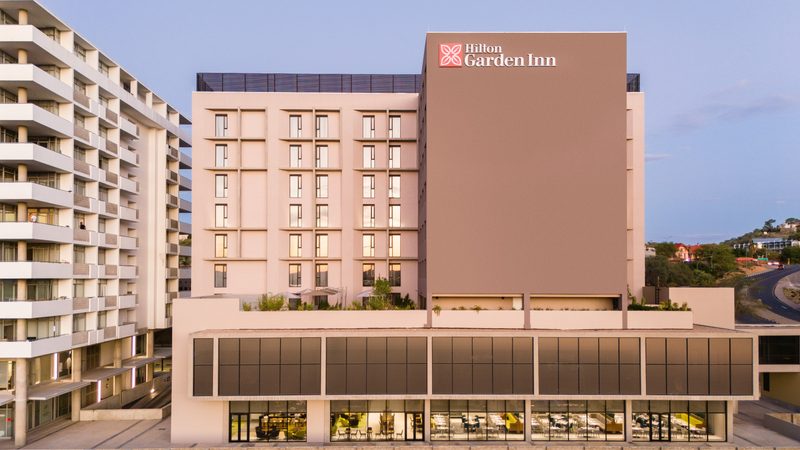
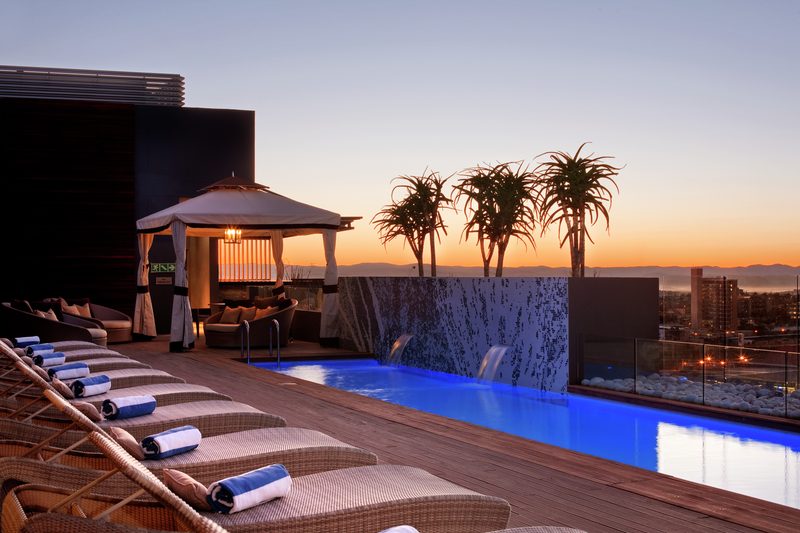
Hand-picked hotels across price tiers for October travellers.
Packing Checklist
Bookmark this page — your progress is saved between visits
Need the full list with shopping links?
Climate-specific gear, brand recommendations, and what to leave at home.
View Namibia Packing List →Essential Tips
Insider knowledge and common pitfalls to avoid
Insider Knowledge
The floodlit waterhole at Okaukuejo rest camp in Etosha is one of Africa's great overlooked wildlife experiences, visitors who book private lodges outside the park never see it. You sit on concrete bleachers above a spring-fed pool, with no guide, no vehicle, no set schedule, and on a good October night you might watch five black rhino drink for 40 minutes while a lion pride circles from the far side. Book a bungalow at Okaukuejo itself through the Namibia Wildlife Resorts portal, the waterhole is a two-minute walk from the bungalows and open all night.
A two-week self-drive itinerary covering Windhoek, Sossusvlei, Swakopmund, Damaraland, and Etosha is achievable in October on paved roads with a standard sedan for the main arteries, and is one of the more rewarding self-directed road trips available on the continent. Namibia has some of the best-maintained gravel roads in sub-Saharan Africa, English is widely spoken, the park accommodation network is functional, and the wildlife in Etosha requires no guide to interpret, the animals are right there at the waterhole. The commonly cited concern that Namibia requires a 4x4 applies to the remote regions. The classic circuit does not.
Windhoek is more than a transit hub, and first-timers consistently rush through it. The Namibian National Museum at the Alte Feste, a German colonial fort built in 1890, traces the country's independence struggle with an unflinching honesty that most national museums avoid. The Katutura township north of the city center was built under apartheid to spatially separate the black population from the German and Afrikaans neighborhoods, and community-run township walking tours operating out of Katutura offer context for contemporary Namibia that no game park provides. Joe's Beerhouse on Independence Avenue, a Windhoek institution since 1991, serves oryx steak and Kapana-style grilled beef under corrugated iron and fairy lights in a garden that fills every evening with a cross-section of Windhoek that feels like the city is.
Namibia's entry requirements are currently among the most straightforward in the region for Western passport holders, citizens of the US, EU, UK, and Australia typically receive a free 90-day stamp on arrival. But this is worth verifying through the Namibian Embassy or official government portal before booking, as policies do shift. More, Namibia sits in a remote part of the world medically: the nearest Level 1 trauma center is in Cape Town, a minimum two-hour flight from Windhoek. Travel insurance with full medical evacuation cover is not optional here.
Avoid These Mistakes
Underestimating driving distances and the consequence of being caught out after dark. On a map, Namibia looks manageable, Windhoek to Etosha looks like a half-day drive. It is 5-6 hours on tar road, and routes through Damaraland or Kaokoland that appear to be shortcuts are 4x4-only tracks requiring full-day commitments with GPS and recovery equipment. First-timers routinely plan 400 km (248 mile) days that would be fine in Europe and find themselves driving in darkness on roads where oryx and kudu stand motionless in headlights. Hitting an oryx at speed, an animal that weighs up to 240 kg (529 lbs), totals the vehicle. Drive before dark, always.
Arriving at Sossusvlei after 8 AM. The dune experience is time-sensitive in October in ways that are difficult to convey: the photographic quality of the light, the navigable temperature for climbing Big Daddy, and the absence of other visitors all deteriorate rapidly after 8 AM. Travelers who arrive at 10 AM because they slept in at their lodge are experiencing a substantially diminished version of one of Earth's great landscapes. Staying inside Sesriem campsite the night before, or at a lodge right outside the gate, is worth the inconvenience specifically to enable the pre-dawn start.
Planning remote northern routes, Kaokoland, Bushmanland, the eastern Caprivi, without a proper 4x4, a second spare tyre, and some form of satellite communication. October's pre-rains can make tracks that were well manageable in September impassable within an afternoon. The Namibian roads authority does not always signpost closures promptly, and the distances between assistance are measured in hours of difficult driving, not minutes. If a reputable Windhoek car rental company advises against a specific route in your vehicle category, the correct response is to change either the vehicle or the route.
Ready to plan your trip to Namibia?
Now that you've got the research covered, here's where to go next.
Book Experiences in Namibia
Top-rated things to do in Namibia this October


